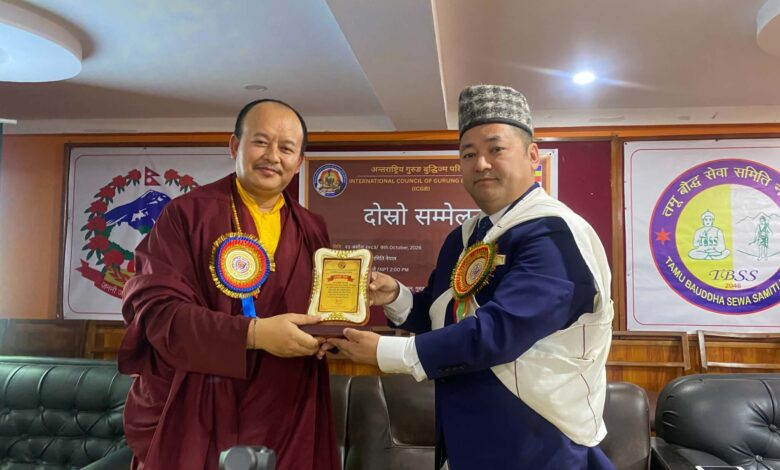
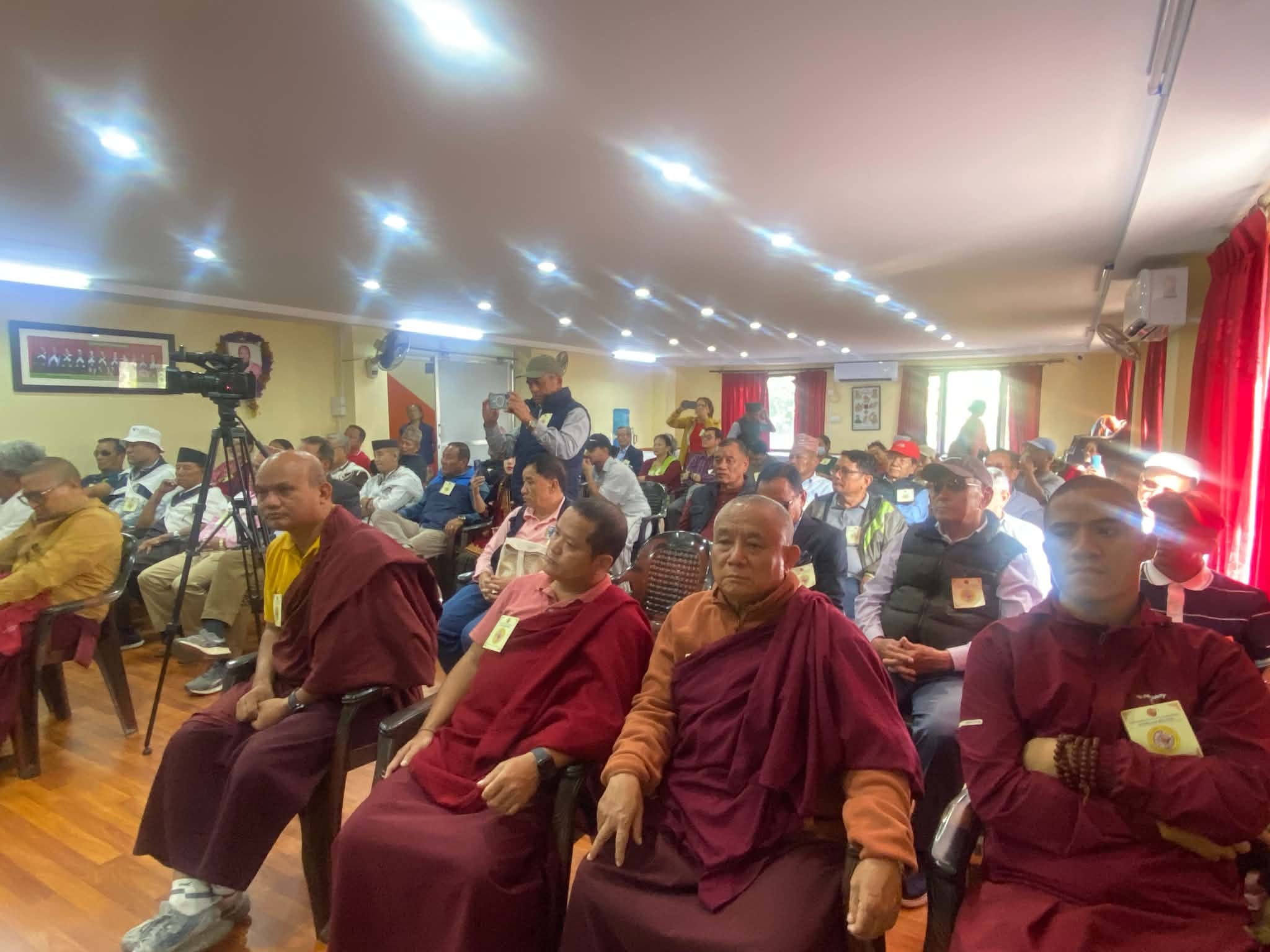
Kathmandu, Nepal: The second international conference of the International Gurung Buddhism Council (IGBC), a global organization representing Buddhist followers within the Tamu (Gurung) community, has successfully concluded in Kathmandu.
The conference, chaired by the Council’s founding president, Dr. Kumar Gurung, brought together prominent Lama spiritual leaders, presidents and representatives of various Gurung organizations, and members of the Gurung community who practice and follow Buddhism.
Established in 2024 in Omaha, Nebraska, USA, by Dr. Gurung, the International Gurung Buddhism Council was founded as a common platform to unite Gurung Buddhists living across the world. The organization brings together members from Nepal, India, the United States, the United Kingdom, Australia, and several European countries.
The Council aims to preserve and promote the traditional customs, cultural heritage, and identity of the Gurung community while encouraging the adoption of the fundamental principles of Buddhism. It has also been actively contributing to the preservation and development of the Gurung language, traditional practices, and cultural institutions. Additionally, the organization supports the education and training of Gurung Buddhist Lamas and the development of Buddhist monasteries within Gurung communities.
Dr. Kumar Gurung was born into a Nepali-speaking Gurung family in Bhutan, whose ancestral roots trace back to Okhaldhunga in eastern Nepal. His family had migrated to Bhutan due to various historical and social circumstances.
Following the displacement of Nepali-speaking communities from Bhutan, Dr. Gurung spent several years in a Bhutanese refugee camp in Nepal. He was later resettled in the United States under the third-country resettlement program.
After establishing himself in business and entrepreneurship in the United States, Dr. Gurung began promoting Gurung Buddhism as a movement dedicated to preserving Gurung cultural identity while embracing the essential teachings of Gautama Buddha.
In collaboration with Buddhist practitioners and Gurung community leaders, including Dhruva Gurung and Pushpa Gurung, who had been advocating the practice of Gurung Buddhism in Nepal, he established the International Gurung Buddhism Council in the United States.
The organization has since expanded its international presence, establishing branch offices in Nepal, India, the United Kingdom, and Australia.
Addressing the conference, founding president Dr. Kumar Gurung explained that the concept of Gurung Buddhism seeks to create harmony between traditional Gurung customs and the fundamental teachings of Buddhism.
“We have defined Gurung Buddhism as a practice that preserves the traditional customs and cultural heritage of the Gurung community while embracing the fundamental principles of Buddhism, including the Four Noble Truths and the Five Precepts,” Dr. Gurung said.
“Our mission is to ensure that being a Buddhist does not require someone to abandon their Gurung identity, traditions, or cultural heritage. A person should be able to preserve their identity as a Gurung while sincerely following the teachings and principles of Buddhism,” he added.
Dr. Gurung, who is also recognized as a Lama spiritual teacher and an interfaith leader in the United States, highlighted several initiatives undertaken by the Council to promote Buddhist education and preserve Gurung cultural heritage.
He stated that the organization has supported Buddhist monasteries in Nepal, organized discussions on the preservation of Gurung customs and traditions, and conducted online Gurung language classes to encourage younger generations to maintain their ancestral language.
The Council has also published educational manuals explaining traditional Gurung cultural practices and Buddhist teachings, along with journals dedicated to Gurung Buddhism.
Among its major initiatives, Dr. Gurung highlighted the commencement of a project to translate the complete collection of the Buddhist Tripitaka scriptures into the Nepali language, with the objective of making the original teachings of the Buddha more accessible to Nepali-speaking Buddhist communities and the general public.
Speaking as the chief guest, respected Buddhist spiritual teacher Khenpo Sir Lama Gurung emphasized the importance of addressing confusion within the Gurung community regarding the relationship between Buddhist teachings and traditional cultural practices.
He stressed that Gurung communities should adopt an approach that enables them to practice Buddhism faithfully while preserving cultural traditions that do not contradict Buddhist principles.
“In certain circumstances, some Gurung Lamas have continued to perform practices such as animal sacrifice, even though such activities contradict the fundamental teachings of Buddhism,” Khenpo Gurung said.
“Performing such practices in the name of tradition cannot be considered the proper observance of Buddhist teachings. However, this does not mean that every traditional custom and cultural practice should be abandoned. Traditions that do not conflict with Buddhist principles can and should be preserved,” he explained.
Khenpo Gurung also expressed concern over the relatively small number of qualified Gurung Buddhist Lamas and emphasized the need to expand Buddhist education and monastic training opportunities for younger generations.
He noted that strengthening the number and capacity of Gurung Lamas would play an important role in preserving both Buddhist teachings and the cultural heritage of the Gurung community.
Speaking at the conference, IGBC Deputy President Dhruva Gurung emphasized that preserving the essential elements of Gurung customs and traditions is necessary to maintain the community’s distinct cultural identity.
“If we abandon all our traditional customs and cultural practices, we may remain Buddhists, but we risk losing our identity as Gurungs,” he said.
He explained that the community should identify, preserve, and continue those cultural practices that are compatible with Buddhist teachings rather than completely abandoning its ancestral traditions.
Dhruva Gurung further emphasized the significant responsibility of Gurung Lamas in maintaining this balance.
He pointed out that some Gurung Lamas who have received formal education in Buddhist monasteries may have limited knowledge of traditional Gurung customs and cultural practices. Therefore, he stressed the importance of providing them with additional education and practical training in Gurung cultural traditions.
Such efforts, he said, would help develop a new generation of Buddhist spiritual leaders who are knowledgeable about both Buddhist philosophy and Gurung cultural heritage.
The second international conference highlighted the growing importance of international cooperation among Gurung Buddhist communities in preserving their spiritual, linguistic, and cultural heritage.
Through its expanding international network, the International Gurung Buddhism Council seeks to strengthen cooperation among Gurung Buddhist organizations, spiritual teachers, cultural institutions, and community members across different countries.
The Council’s broader vision is to promote Buddhist moral education, encourage the practice of compassion and nonviolence, preserve the Gurung language and cultural traditions, and support the development of Buddhist institutions for future generations.