Minister Mahabir Pun and TOKMA Leadership Discuss IT Investment, Innovation and Employment in Nepal

Annual Information Technology Summit & Exhibition Proposed
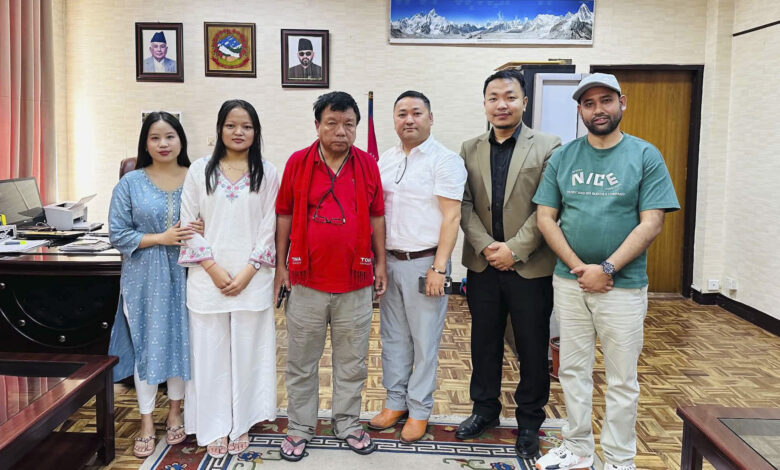
Kathmandu, Nepal: In a significant discussion aimed at advancing Nepal’s digital economy and strengthening international technology collaboration, Honorable Mahabir Pun, Minister of Science, Technology and Innovation, Government of Nepal, held a high-level meeting with Dr. Kumar Gurung, CEO of Tokma Digital Corporation (TDC), Nebraska, USA, and four other members of the TOKMA leadership team.
The meeting focused on attracting foreign direct investment (FDI) to Nepal’s information technology sector, creating employment opportunities for Nepali professionals, fostering innovation, strengthening technology education and positioning Nepal as a competitive technology and innovation destination in South Asia.
During the meeting, Dr. Gurung formally introduced TOKMA – One Stop Services, an innovative digital platform designed to connect customers with trusted service providers through a single application. Guided by the slogan, “Everything you need, just one tap away,” the platform aims to simplify access to a broad range of services while creating an integrated digital ecosystem for customers and service providers.
Nepal at the Center of TOKMA’s Global Vision
Dr. Gurung emphasized that although Tokma Digital Corporation is headquartered in the United States, Nepal remains central to the company’s long-term vision and development strategy. He noted that the majority of TOKMA’s current workforce is based in Nepal, demonstrating the company’s commitment to investing in local talent and creating meaningful professional opportunities for Nepali citizens.
The TOKMA leadership outlined a broader vision in which Nepal could develop into an important technology development and operational hub capable of producing globally competitive digital products and services. The company plans to continue expanding opportunities in software engineering, IT services, digital marketing, customer support, operations management and other high-demand professional sectors.
“We believe Nepal has the talent, determination and innovative capacity needed to compete globally. Our goal is to create opportunities that allow Nepali professionals to participate in the global digital economy without having to leave their homeland,” Dr. Gurung said during the discussion.
Challenges Facing IT Investment in Nepal
A major portion of the meeting was devoted to challenges affecting foreign investment and the development of Nepal’s technology sector. The TOKMA delegation emphasized that Nepal has significant potential to attract international technology investment, but improvements in administrative efficiency, regulatory clarity, workforce development and digital infrastructure could substantially strengthen the country’s competitiveness.
Administrative delays were identified as one of the major concerns for foreign investors. The delegation cited the experience of Tokma Technologies Pvt. Ltd., which required approximately six months to complete its FDI approval process. The TOKMA leadership suggested that a modernized and fully digital approval mechanism could significantly reduce processing times and provide international investors with greater confidence and predictability.
Transparency and good governance were also discussed as essential components of an investment-friendly environment. The delegation emphasized that transparent digital processes, clearly defined procedures and strong accountability mechanisms could help reduce opportunities for unofficial payments while improving investor confidence in Nepal.
Another major issue raised during the meeting was the availability and retention of highly skilled IT professionals. Although Nepal has a growing population of talented young technology professionals, many skilled workers seek opportunities abroad because of higher salaries, career prospects and access to advanced technology industries. The delegation stressed the importance
of expanding high-quality IT education, creating competitive employment opportunities within Nepal and strengthening cooperation between universities and private technology companies.
The discussion also addressed the gap between academic curricula and the practical skills demanded by the technology industry. Participants emphasized that university programs should place greater importance on hands-on learning, internships, industry partnerships, project-based education and exposure to emerging technologies. Such reforms could help graduates transition more effectively from academic institutions into professional technology careers.
Foreign-exchange regulations and other regulatory constraints were also discussed. The delegation noted that international technology companies require clear, predictable and efficient mechanisms for investment, payments and cross-border business operations. Improving regulatory clarity and simplifying procedures could make Nepal more attractive to foreign technology companies seeking development and operational bases in South Asia.
Intellectual property protection was another important subject of discussion. Stronger enforcement of software copyrights, patents, trademarks and other intellectual property rights was identified as essential for encouraging innovation, protecting technology companies and attracting international investment.
The meeting also highlighted the importance of strengthening Nepal’s digital infrastructure. Continued investment in data centers, cloud computing facilities, reliable high-speed connectivity and other advanced digital infrastructure would help Nepal compete more effectively with established technology hubs in the region.
Cybersecurity preparedness was similarly identified as a growing national priority. As Nepal’s economy becomes increasingly digital, the risks associated with cybercrime, data breaches and attacks on critical digital infrastructure are also expected to increase. Strengthening national cybersecurity capabilities, developing skilled cybersecurity professionals and improving institutional preparedness were therefore discussed as important elements of Nepal’s long-term digital strategy.
The delegation further emphasized the importance of consistent technology policies, regulatory stability and an investment-friendly business environment. Predictable policies and long-term strategic planning, participants noted, could strengthen Nepal’s reputation as a reliable destination for international technology investment.
Proposal for Nepal IT Research and Innovation Center
Among the major recommendations presented during the meeting was the establishment of a dedicated Nepal IT Research and Innovation Center in collaboration with relevant national institutions.
The proposed center would focus on technology research, emerging technologies, product development, commercialization and innovation. It could also serve as a collaborative platform connecting government agencies, universities, researchers, entrepreneurs, startups and private-sector technology companies.
The center could provide opportunities for young researchers and technology professionals to develop innovative solutions while helping transform promising ideas and academic research into commercially viable products and services. Participants discussed how such an institution could contribute to building a knowledge-based economy and accelerate Nepal’s transition toward an innovation-driven nation.
The TOKMA delegation also emphasized the importance of strengthening Nepal’s startup ecosystem. Greater cooperation among entrepreneurs, investors, universities, government institutions and established technology companies could help promising startups access mentorship, technology expertise, investment opportunities and international markets.
Expanding Collaboration and Employment Opportunities
The meeting explored potential collaboration among TOKMA, the Ministry, innovation institutions, universities and private-sector stakeholders. Discussions centered on technology-sector development, employment generation, internship and skills-development programs for students and young professionals, international project opportunities for Nepali technology experts, intellectual property protection, workforce development and public-private partnerships.
Dr. Gurung clarified that TOKMA is not seeking financial assistance or government endorsement. Instead, the company seeks guidance, institutional cooperation and opportunities to contribute its technological expertise, international experience and professional network to Nepal’s economic and technological advancement.
A central objective of the company’s strategy is to create professional opportunities that allow Nepali engineers, developers, designers, marketers and other skilled professionals to work on international projects while remaining in Nepal. Such a model could help create high-value employment, strengthen local expertise and enable Nepal to participate more directly in the global digital economy.
Annual Information Technology Summit & Exhibition Proposed
One of the most notable proposals discussed during the meeting was the creation of an Annual Information Technology Summit & Exhibition (AITSE), envisioned as a flagship international event that could help position Nepal as an emerging global technology and innovation destination.
The proposed summit would bring together government leaders and policymakers, international investors, venture capital firms, universities, research institutions, global technology companies, entrepreneurs, innovators, startups and industry experts.
The event would provide a platform to showcase Nepal’s technological capabilities, promote innovative products and research, attract foreign investment, facilitate international partnerships and connect Nepali technology companies and professionals with global markets. It would also seek to encourage entrepreneurship and generate high-value employment opportunities for Nepali youth.
TOKMA expressed its interest in collaborating with the Government of Nepal and relevant institutions to explore organizing the summit through a public-private partnership model. During the discussion, Minister Pun advised the TOKMA leadership to meet with the Prime Minister regarding the proposal before proceeding toward a final decision on the initiative.
Minister Pun Welcomes Innovation and Private-Sector Participation
Minister Pun acknowledged the importance of innovation-driven investment and emphasized the need for stronger collaboration among government institutions, private enterprises, academic institutions, researchers and innovators to accelerate Nepal’s digital transformation.
The discussion highlighted the value of initiatives that create employment, encourage innovation, strengthen practical technology education and connect Nepal with international markets. Research, entrepreneurship and practical technological solutions were also discussed as important foundations for sustainable economic development.
The meeting reflected a shared understanding that government alone cannot build a competitive technology economy. Universities, private companies, entrepreneurs, researchers, international investors and government institutions all have important roles to play in developing an ecosystem capable of supporting innovation and creating opportunities for the next generation.
A Shared Vision for Nepal’s Digital Future
The meeting concluded with both sides expressing interest in exploring practical opportunities for collaboration that could strengthen Nepal’s technology ecosystem, attract international investment and generate high-quality employment opportunities for Nepali professionals.
The discussions reflected a broader vision of a future in which Nepal does not simply consume technologies developed elsewhere but increasingly researches, develops and exports its own digital products and services to the international market.
With a young and increasingly technology-oriented population, expanding digital connectivity and a growing pool of IT professionals, Nepal has an opportunity to strengthen its position in the global digital economy. Achieving that potential, participants emphasized, will require investment-friendly policies, modern infrastructure, quality education, stronger intellectual property protection, research and innovation, cybersecurity preparedness and sustained cooperation between government and the private sector.
The meeting between Minister Mahabir Pun and the TOKMA leadership led by Dr. Kumar Gurung ultimately highlighted a common vision: leveraging technology, innovation, international collaboration and Nepal’s human talent to create sustainable economic growth, generate employment and empower the next generation of Nepali professionals.