Scholars Call for Research into Dashain Boycott Decision and Cultural Practices Among Magars

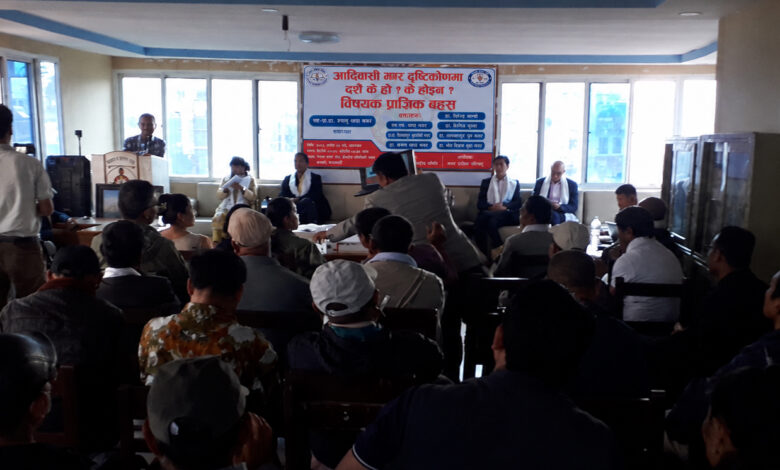
Kathmandu — Scholars have called for research into the gap between the Nepal Magar Association’s decision to abandon Dashain and the festival’s continued observance among members of the Magar community.
The issue was discussed at an academic forum titled “What Is Dashain—and What Is It Not—from an Indigenous Magar Perspective?” held on Ashoj 25, 2083 BS, at the association’s building in Kalanki, Kathmandu. Participants stressed that decisions concerning cultural practices should be grounded in thorough research and an understanding of community life.
The discussion examined why the association’s decision in 2048 BS to abandon Dashain had not been fully implemented. Speakers called for research into the differences between institutional policies and the practices followed by the wider community.
Presentations were delivered by Nepal Magar Association founding member and former minister M. S. Thapa Magar, Dr Bhoj Bikram Budha Magar, Dr Kamal Thapa Magar, Dr Lal Bahadur Pun Magar and Professor Dr Chitra Bahadur Budhathoki Magar. Scholars from the Yakthung Limbu community, Dr Kshitij Subba and Dr Dhirendra Nalbo, also offered perspectives on festivals and cultural practices.
Participants discussed how Dashain observances among Magars, particularly in the Gandaki river basin, were connected to ancestor worship, nature and land worship, rituals at forts, and traditions associated with sacred sites. They also highlighted the need to study links with dances such as Saraya, Sorathi, Maruni and Ghantu, alongside traditional community systems known as Bheja, Gumshtha and Gaunla.
Speakers noted that Dashain also provided an opportunity for people working away from home to return, reunite with relatives and share communal meals. One argument raised during the discussion was that the decision to abandon the festival had not adequately addressed alternatives to these social and cultural functions.
Participants observed that some families who had stopped receiving Dashain tika continued to host guests, visit relatives and share festive meals. They argued that the festival could not be understood solely through religion and that its historical, political, social and economic dimensions also required examination.
Dr Subba and Dr Nalbo discussed the introduction of Dashain into Limbu society, campaigns to boycott it, and the continuation of related social practices. They also explored how dancing, singing and fundraising for community organisations during Tihar had contributed to the festival’s acceptance.
The forum raised questions about political party influence on Indigenous organisations, consultation with communities and the scope for independent academic debate. Participants suggested that decisions made without assessing community needs or establishing a clear understanding of existing practices could face implementation difficulties.
Scholars also proposed a comparative study of why the decision to celebrate Maghe Sankranti had gained acceptance while the call to abandon Dashain had not been fully adopted. Professor Dr Budhathoki Magar referred to Maghe Sankranti’s connections with the Hindu calendar and traditions, questioning the relationship between stated religious identity and cultural practice.
Speakers called for Indigenous research approaches to examine original community traditions, the influence of state power and cultural changes over time. They also suggested distinguishing between Indigenous practices incorporated into Dashain and customs expanded through state influence.
Nepal Magar Association president Raksh Bahadur Raika Magar said academic discussions would continue through the Magar Academic Council. He also pledged greater attention to research and a review of past decisions and policies in light of changing circumstances.
Dr Bishnu Kumar Singjali, member-secretary of the Magar Academic Council, introduced the theme and moderated the programme.