Iran oil minister resigns, replaced by top executive amid US blockade on Tehran’s exports

Tehran [Iran], October 5 (ANI):
Iranian Oil Minister Mohsen Paknejad has resigned from his post, with the National Iranian Oil Company chief stepping in as his temporary replacement as the United States continues to enforce a strict naval blockade on Tehran’s petroleum shipments.
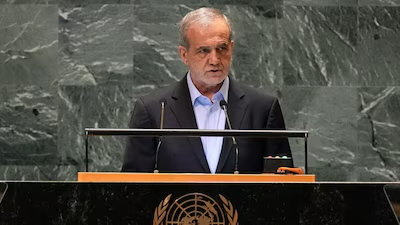
Iranian President Masoud Pezeshkian accepted the resignation and appointed NIOC head Hamid Bovard as acting oil minister, according to a statement broadcast by state media outlet IRIB.
State television broadcast an interview with a spokesperson from the Iranian presidential office, who explained that Paknejad had previously offered to step down “due to personal issues”, though his initial departure request was declined.
Pezeshkian initially urged the minister to stay on duty, but ultimately approved the resignation after Paknejad maintained his stance. The president subsequently “commended his efforts and sincere service” following the departure.
The Strait of Hormuz has turned into a major flashpoint during the ongoing Middle East war. Prior to strikes carried out by the United States and Israel against Iran in late February, the vital maritime corridor managed 20 per cent of worldwide crude oil and liquefied natural gas shipments.
In response to Tehran restricting commercial shipping traffic and firing upon vessels deemed to have made unauthorised passages, Washington instituted a counterblockade targeting Iranian ports to halt petroleum exports.
The economic strain caused by American measures previously led to lengthy queues forming outside petrol stations across Tehran and various other Iranian cities.
Depriving Iran of its oil income remains a core objective of the economic strategy pursued by Washington. The US Treasury revealed fresh sanctions on Friday aimed at Iran’s automotive and rail industries under the framework of the “Operation Economic Outcast” campaign.
Treasury Secretary Scott Bessent stated that these restrictions are designed to further diminish Tehran’s financial capacity to sustain the war, noting that Washington is actively working to “drain the regime’s revenue once and for all”.
Bessent added that American pressure targets remaining streams of petroleum income, while the administration maintains that naval blockades and sanctions seek to obstruct crude sales and foreign currency access.
Meanwhile, US President Donald Trump remarked on Saturday that petroleum prices are declining and asserted that Iran has “virtually given up” ambitions for developing a nuclear weapon, as hostilities reach their eighth month.
The intense economic campaign spearheaded by the Trump administration has placed Iran’s energy sector at the heart of the war, heightening the impact of Paknejad’s departure as Tehran attempts to maintain its vital petroleum revenues.
—