
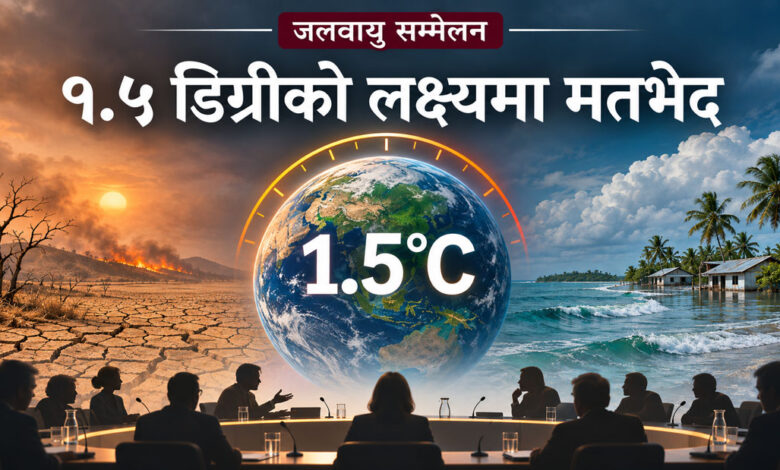
Countries are divided at this year’s United Nations climate conference, COP31, over the goal of limiting global warming to 1.5°C above pre-industrial levels.
The threshold, a central benchmark for international climate action for a decade, is facing growing uncertainty. In September, the United Nations warned that exceeding 1.5°C was now imminent and unavoidable. The Earth’s average temperature has already risen by approximately 1.4°C.
At the COP31 conference in Antalya, Türkiye, some countries have insisted that the 1.5°C target must remain in place. Small island nations particularly vulnerable to climate change view the goal as a matter of survival.
Palau’s President Surangel Whipps Jr said the target was closely linked to his Pacific island nation’s food security, economy and sovereignty.
According to a summary of negotiating priorities released by Australia, some countries want the final agreement to reaffirm that 1.5°C remains the appropriate target.
However, other nations are reportedly seeking to remove the target from the agreement. Negotiating sources identified the Arab Group and the Like-Minded Developing Countries group, which include countries such as Saudi Arabia and India, as being among those pushing for its removal.
Greenpeace representative Jasper Inventor said some developing countries were concerned that retaining the target would expose them to further pressure to cut emissions without adequate financial support.
Meanwhile, former UN Secretary-General António Guterres said that even if temperatures exceeded 1.5°C, the period above that threshold should be kept as short as possible.
Scientists warn that crossing the threshold would increase the risks of severe flooding, heatwaves and irreversible damage to coral reefs.
Pierre Friedlingstein, a climate scientist at the University of Exeter, said bringing temperatures back down to 1.5°C would require rapid emissions reductions alongside tree planting, wetland conservation and the widespread deployment of new technologies.
He said achieving the goal was not impossible, but would be extremely challenging.


