
Britain’s Bonfire Night: From a Failed Plot to a Fireworks Tradition

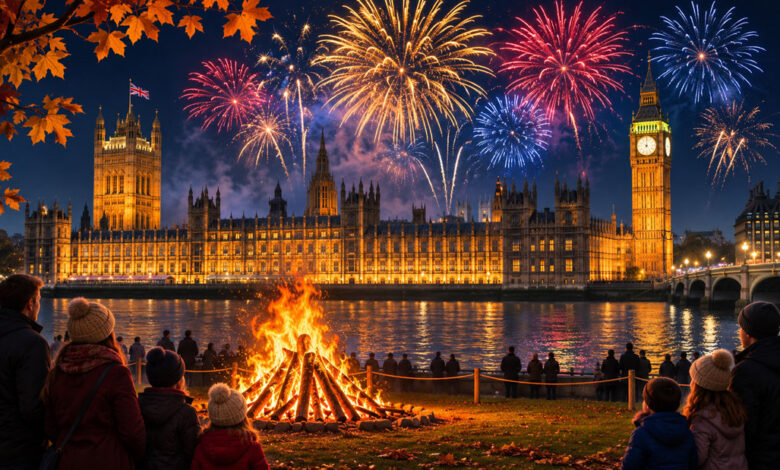
London, 6 November — As fireworks brighten Britain’s November skies and crowds gather around bonfires, the celebrations recall a story more than four centuries old—a tale of religious persecution, political conspiracy and a failed attempt to kill a king.
Held on and around 5 November, Bonfire Night commemorates the discovery of the Gunpowder Plot of 1605, when a small group of Catholic conspirators planned to blow up Parliament. Also known as Guy Fawkes Night or Fireworks Night, the occasion has evolved from a state-backed religious observance into a familiar tradition of public displays and community gatherings.
The conspirators intended to detonate explosives beneath the House of Lords during the State Opening of Parliament on 5 November 1605, killing King James I and those assembled for the ceremony.
Although Guy Fawkes became the figure most closely associated with the plot, its principal organiser was Robert Catesby. Fawkes was entrusted with igniting the gunpowder.
The group placed 36 barrels of gunpowder in a storage chamber directly beneath the House of Lords. However, an anonymous warning letter received in late October prompted investigations. During searches on the night of 4–5 November, Fawkes was discovered guarding the explosives and arrested before the plan could be carried out.
The conspiracy emerged from the deep religious divisions of early seventeenth-century England. Under its Protestant monarchy, Catholics faced restrictions on worship and religious persecution. When James I succeeded Elizabeth I in 1603, some Catholics hoped his reign would bring greater tolerance. As those hopes faded, a small group of disaffected men turned towards violent conspiracy.
The plot should not, however, be understood as an undertaking supported by Catholics as a whole. According to Parliament’s historical account, some Catholic priests who had learned something of the plans tried to discourage them.
In January 1606, the English Parliament passed the Thanksgiving Act, establishing an annual religious observance on 5 November to mark the king’s deliverance. Special church services and sermons became regular features of the occasion, alongside bell-ringing, bonfires and fireworks.
These early commemorations combined loyalty to the monarchy with anti-Catholic sentiment. At various points in their history, celebrations included the burning of effigies of the Pope. As restrictions on Catholic worship were gradually removed, Guy Fawkes increasingly replaced the Pope as the figure burned on bonfires.
Behind the spectacle, therefore, lies a history shaped not only by celebration but also by religious hostility and intolerance.
The law requiring annual observance was repealed in 1859, but the tradition endured. Bonfires, organised fireworks displays and family gatherings continue to mark the occasion, while the burning of a symbolic “Guy” remains part of some celebrations.
A reminder of the plot also survives within Parliament itself. Before the State Opening, the Yeomen of the Guard carry out a ceremonial search of the building’s cellars. The ritual preserves the historical memory of the conspiracy, while modern security arrangements operate separately.
In 2026, 421 years after the plot was foiled, Bonfire Night remains an enduring part of British cultural life. What began as an official expression of religious and royal thanksgiving has become an occasion for communities to gather beneath illuminated skies—while the story of faith, power and conflict remains embedded in the tradition.


