
I was born into a very poor family in Buipa, Khotang, a hilly district in eastern Nepal. That beautiful village, nestled in the lap of Mount Everest, the highest peak in the world, was the entire world of my childhood. Life in the village was full of hardships and shortages, yet the breathtaking beauty of nature and the warmth of village life enriched my heart and shaped my character.
When I look back through the pages of my life, I find no grand dreams written there. I never longed to build a palace of wealth, nor did I aspire to reach the heights of fame and prestige. My wishes were always simple: two meals a day, a safe roof over my head, and smiles on the faces of my family. Within these modest desires, I sought the true wealth of life.
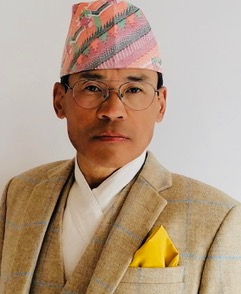
At the tender age of eighteen, I joined the British Gurkhas, without knowing what the future would hold. I served the British Government for twenty years and, during that time, travelled to many corners of the world. I spent dark nights in dense jungles with my rifle as my pillow.
I endured the scorching heat of the barren deserts of the Arabian Gulf and experienced the harsh realities of war. At times, the cold made my body tremble; at others, the intense heat made it difficult even to breathe. Yet throughout those years, I held onto one simple hope: that today’s hardship would make tomorrow’s life a little easier.
In 2004, I took off my military uniform for the last time and handed it in. A new chapter began as I entered civilian life. However, the transition was far from easy. In many ways, the struggles that followed were more difficult than those I had faced on the battlefield. Finding work, supporting a family, worrying about the future, and dealing with the daily pressures of life felt like a continuous test of endurance.
But throughout that journey, I was never alone. My wife stood beside me every step of the way. She has been my greatest source of strength, courage, and inspiration. She spent most of her working life as a cleaner and housekeeper in hotels. While many people were still asleep, she would wake before dawn and leave for work. Her days were spent cleaning rooms, toilets, and beds that others had used. Standing for long hours and performing physically demanding tasks became part of her daily routine.
Many times, I watched her return home with a tired face. Her hands had become rough from years of hard work. During the cold British winters, her feet would ache from the freezing temperatures. Yet I never once heard her complain. Instead, she would smile and say:
“All these hardships are for our children, so their dreams can come true.”
Behind that smile lay countless sacrifices. Hidden within it were tears she never showed and dreams she quietly set aside. Only the two of us truly knew how much had been given up along the way.
We never became wealthy. Some months, it was difficult just to balance the household budget. We gave up many things we needed ourselves so that we could save for our children’s future. Before buying new clothes, we paid their university fees. We suppressed our own desires so that their dreams could take flight.
When I look back today, I realize that those difficult days were never a punishment. They were tests set by the future itself, and we answered them with sweat, perseverance, and patience.
My life was filled with struggles, but those struggles never allowed a dream deep within me to die. That dream was to see the world with my own eyes, to understand people, and to search for truth. I did not simply want to travel from one country to another. I wanted to discover the meaning of life itself. That is why my footsteps were drawn toward many of the world’s sacred places.
I visited Lumbini several times, where Siddhartha Gautama began the journey that would lead him to become the Buddha. I travelled to Vrindavan, where the stories of Krishna still seem to echo in the air. From Jerusalem, I journeyed to Bethlehem in Palestine, believed to be the birthplace of Jesus Christ. I also visited the Vatican in Rome, the spiritual heart of millions of Catholics around the world.
Those journeys were not in vain. As I travelled through these sacred lands, I came to realize something remarkable. The God I had been searching for was not hidden inside temples, shrines, mosques, churches, or pilgrimage sites. Instead, He was quietly residing within the depths of my own soul.
I learned that whenever I stand beside someone in their suffering, wipe away another person’s tears, offer hope, or help someone sincerely from my heart, the divine within me awakens. When I stand on the side of humanity, I become a small part of God myself. But when I follow the path of selfishness, hatred, injustice, or cruelty, darkness is born within the same soul. In those moments, a person can become their own devil.
My life could never be confined to a single country or continent. What began as a soldier’s journey gradually grew into a deep desire to see the world with my own eyes, to walk through history with my own feet, and to experience the stories of civilizations firsthand.
I did not travel merely for sightseeing. I travelled in search of history. I wanted to visit the places where humanity had left its most enduring marks.
When I stood before the Great Wall of China, one question filled my mind: How could people of that era have built such an immense structure? It felt as though the stones themselves were still telling the stories of the labourers whose sweat, suffering, and dedication made it possible thousands of years ago.
In India, as I gazed upon the white magnificence of the Taj Mahal, I was not simply looking at a monument. I was reading a story of love. Built by an emperor in memory of his beloved queen, that extraordinary masterpiece taught me that true love can be stronger than time itself.
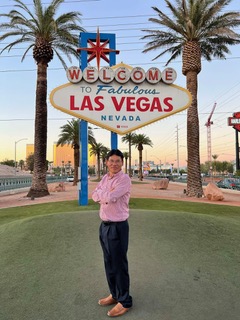
In Egypt, standing before the Pyramids of Giza, I felt as though I had stepped back thousands of years into the past. Seeing those wonders of the world up close revealed the vast reach of human imagination and ingenuity. The photographs I took there are more than simple memories; they are among the proud achievements of my life’s journey.
One of my dreams was to study history not only through the pages of books, but by standing on the very ground where it happened. That is why I travelled to Rome, Italy. Standing in front of the Colosseum, grinning for a photograph, I felt as though history itself was speaking to me as I walked among the remnants of the Roman Empire left behind by Julius Caesar.
Standing on the soil of Constantinople, now modern-day Istanbul, I could sense the grandeur and power of the Ottoman Empire. Walking through the streets of Paris once traversed by Napoleon, I felt as if I could hear the echoes of the French Revolution. Spending a day in London, England, a city shaped through the efforts of Oliver Cromwell, I found myself reflecting on the English Civil War and the many turning points of history.
When I arrived in Washington, D.C., I vividly recalled the role George Washington played in the American War of Independence. In disciplined Tokyo, I reflected on the rise of the Japanese Empire and the devastation caused by the Second World War. As I travelled through many countries around the world, I also witnessed firsthand how British colonialism had transformed societies across the globe.
It was not only human history that fascinated me, but also the story of human achievement. Visiting the Suez Canal in Egypt and the Panama Canal in Panama, I came to understand that human determination can connect not only people, but entire oceans. These canals are not merely waterways; they are living monuments to human ingenuity, courage, and vision.
During my travels, I experienced culture not only in museums but also through food. From the bustling Temple Street markets of Hong Kong to Marina Bay in Singapore, I walked until my feet ached. From the iconic Burj Al Arab in Dubai, standing proudly on the shores of the Arabian Sea, to London’s luxurious Dorchester Hotel, I sampled a remarkable variety of cuisines. I discovered that every Michelin-starred dish carried the story of a nation. Each flavour introduced me to a new culture and a different way of life.
Today, when I look back on my life, I may not possess wealth worth millions, but I hold an immeasurable treasury of experiences. I did not merely read history from books; I walked through it. I did not only photograph the world’s wonders; I also felt the stories hidden behind them.
Perhaps that is why I can proudly say:
“Life may not have given me great wealth, but it gave me the eyes to see the world. It gave me the opportunity to understand history. And those experiences are more valuable than any material fortune.”
I have always believed that the world exists not merely to be seen, but to be understood. That is why my journeys were never simply for entertainment; they were journeys of learning, curiosity, and self-discovery. Wherever I travelled, I did not return after merely seeing the streets and buildings. I tried to understand the history, appreciate the art, and grasp the spirit of the people who lived there.
My love for art took me from the National Gallery in London to the Hermitage Museum in Saint Petersburg, Russia. Standing there, I had the privilege of closely admiring the masterpieces of Leonardo da Vinci, the beauty-filled paintings of Raphael, the extraordinary genius of Michelangelo, and the emotionally charged colours of Vincent van Gogh. At times, it felt as though these works were not painted on canvas but etched into the depths of the human soul itself. It was there that I truly realized how a single painting can tell a story far greater than a thousand words.
Yet my journey was not confined to museums and art galleries alone. I also wanted to see the real face of the world. For that reason, I visited places ranging from Kabukicho in Tokyo to Soi Cowboy and Patpong in Bangkok, and even the famous red-light district of De Wallen in Amsterdam. In those places, I discovered much more than entertainment. I witnessed different layers of society, as well as people’s desires, weaknesses, struggles, and realities. Wherever people may live, and whatever their stories may be, I came to understand that the deepest human longings are often remarkably similar.
As I travelled through most of the major cities of Eastern Europe, each city seemed like an open history book. Standing near the Rialto Bridge in Venice, I often felt that the waters flowing through the canals beneath it were whispering centuries-old stories of trade, love, and civilization.
From the beautiful city of Vancouver on Canada’s west coast to the breathtaking Geirangerfjord in Norway, I was deeply touched by the warmth, simplicity, and kindness of the people I met. Through all the world’s different languages, religions, customs, and cultures, I came to appreciate that human goodwill remains fundamentally the same everywhere.
My connection with the seas deepened even further after visiting the Norwegian fjords. The silence of the Dead Sea, the rugged energy of the North Sea, the historical depth of the Mediterranean, and the blue beauty of the Caribbean Sea have all left lasting impressions on my heart.
Among these seas stand remarkable islands such as Cyprus, Rhodes, Crete, Malta, Ibiza, Lanzarote, Mallorca, and Fuerteventura. Whether in the Caribbean or among the Canary Islands, whenever I stood upon their shores, I saw nature itself as an artist, painting a new masterpiece every day with the rhythm of the tides.
Life has granted me another great blessing as well: I have taken eighteen cruise voyages so far. Through these journeys, I was able to travel repeatedly from one end of the world to the other. Along the way, I witnessed the mighty waves of the Atlantic Ocean and the boundless expanse of the Pacific Ocean.
There were moments when my wife and I sat together on a chair on the eighteenth deck of a cruise ship, gazing toward the distant horizon. In those moments, I was reminded of how small human life is and how immense the world truly is. And whenever I found myself in the middle of the Pacific, contemplating the unfathomable depths of the Mariana Trench, my sense of awe and respect for the mysteries of nature only grew stronger.
My fascination with water was not limited to the seas; it extended to rivers as well. I experienced the depth of the Colorado River in America and the sorrow of China’s Yellow River (Huang He). Along the banks of the Danube River, I witnessed the histories of various nations and cities flowing alongside its waters. While cruising on the Nile River, stretching nearly 6,853 kilometres and regarded as the world’s longest river, I found myself reflecting on the story of early human civilization, my eyes filled with emotion.
Beyond rivers, I also admired the beauty of magnificent waterfalls. Standing before Rhine Falls and Niagara Falls, listening to their thunderous roar, I felt the awe-inspiring power of nature. Watching those waterfalls, it often seemed to me that human life is much like water itself: sometimes calm, sometimes a raging torrent, yet always moving forward.
Once I came to understand the saying, “If you do not engage in politics, you will be ruled by those less capable than yourself,” I developed a deep interest in politics.
So, I was not content merely to read books. I visited Karl Marx’s grave in Highgate, London. I travelled to Shaoshan, China, to see the birthplace of Mao Zedong. In Salford, Manchester, I traced the industrial footprints connected to Friedrich Engels. My footsteps carried me from Napoleon Bonaparte’s birthplace in Ajaccio, Corsica, to the grave of Adam Smith in Edinburgh. I journeyed extensively across Germany, where the philosophy of Friedrich Nietzsche and the moral teachings of Immanuel Kant left a profound mark on my heart.
I also visited the dark and remarkably narrow prison cell in Saint Petersburg where Leon Trotsky had once been held. Reflecting on Joseph Stalin, I continued my journey to Siem Reap, Cambodia. At Angkor Wat, I witnessed traces of the suffering associated with the era of Pol Pot. In Gdansk, Poland, I reflected on the struggle of Lech Wałęsa, whose efforts helped bring down the communist regimes of Eastern Europe. These journeys taught me that politics is not merely about power; it is also a story of human hope, suffering, and change.
I have always believed that travel is a university. With that conviction, I fulfilled my wish of visiting all thirty-nine colleges and four halls of the University of Oxford. I stood in the grounds of Harvard University in Boston and took a photograph beside the statue of John Harvard. I wandered through the campuses of Bologna University, Imperial College London, the London School of Economics, the University of Warwick, MIT, and Saint Petersburg University, often strolling with a cup of coffee in hand. Those buildings were not merely structures of brick and stone; they were temples of human knowledge, research, and dreams.
Perhaps the greatest education I have ever received did not come from a classroom. It came from travel. It came from the world itself. It came from the people who inhabit it. For that reason, I have always told my children this whenever I spoke about education:
“I may not be able to leave you great wealth, but my experiences are your inheritance. More than the books I have read, it is the roads I have walked that have taught me the most. See the world, understand people, learn from history. Because travel is not merely about moving from one place to another. Travel is about discovering who you truly are.”
Listening to me, that same son is today working in the United Kingdom at the Oxford University Hospital as a surgeon specializing in diseases of the colon, rectum, and bowel (a colorectal surgeon). The little boy who once held my finger on his way to school has now become a doctor entrusted with saving the lives of patients. When I see that innocent child, who grew up in a village wearing torn shorts, now dressed in a white coat, my heart fills with pride. My chest swells with a sense of accomplishment. The corners of my eyes grow moist, and tears well up unexpectedly. Yet I am happy, knowing that, as a poor father, I was able to fulfil my responsibility.
My daughter completed her law degree at the renowned Queen Mary University of London. She is now a solicitor working for a prestigious law firm in Birmingham. In a male-dominated society where women have often faced injustice, seeing my daughter succeed in the field of law brings me immense satisfaction. At the end of the month, when she receives her salary, the smile on her face fills my heart with joy. That smile is not merely the happiness of earning money; it is the reward for years of hard work, study, sacrifice, perseverance, and dedication. As a father, I feel a deep sense of pride and fulfilment when I see her success. It makes me feel that all the effort I invested in securing a brighter future for my children has been worthwhile. Looking at her confident face, I feel that all my struggles and hardships have found their meaning.
Today, I am sixty-two years old. When I look back on the long journey of my life, it seems that I have walked many roads, met countless people, visited many countries, and endured many hardships.
Almost forty-three years ago, I began my journey in the British Gurkhas as a simple soldier. As time passed, military life taught me many new skills. I became a military truck driver and spent nearly twenty years driving across different parts of the world, faithfully carrying out my duties. My youth was spent navigating the winding hills of Taimo Shan in Hong Kong, the dusty sands of the Arabian deserts, and the narrow roads of the Balkans, all while fulfilling the countless responsibilities of military service.
When my military career came to an end, I thought to myself, “Now I will do something of my own. I will start a business and make money.” But I soon discovered that dreaming and achieving those dreams are not the same thing. I had no experience in business, no knowledge of how to run one, and no mentor to guide me. As a result, I could not travel very far along that path.
To make a living, I had to look for work once again. At times, I worked as a security guard. At other times, I washed dishes in restaurants. Sometimes I drove trucks, and sometimes I worked as a labourer helping others. Today, I am employed as a Facilities Assistant with a local council.
As the years pass, however, my body is no longer what it once was. There was a time when I could stand for hours and carry heavy responsibilities with ease. Now I cannot. Fatigue comes more quickly. Sometimes I feel that my body itself is gradually asking for rest.
Now I am searching for that rest. Yet whenever I think about retirement, my mind finds no peace. In the middle of the night, I suddenly wake up. The house is silent. Every member of the family is fast asleep. But within my mind, a storm of questions continues to rage.
“What will happen when my income stops? How will I survive?”
I see such worries in my dreams, and I wake up startled even in my waking hours. Then I think again, “But how many more years am I likely to live anyway?”
I do not have answers to these questions. At times, the worry becomes so deep that sleep escapes me. The uncertainty of the future weighs heavily on my heart. From the outside, I may appear calm, but within me a silent battle of fear, anxiety, and restlessness is constantly being fought.
Most of all, I do not want to become a burden to my children. They have worked hard to build their lives. Today, they are successful in their respective fields. They have their own dreams and responsibilities. As a father, my wish has always been to give them something, not to take from them.
Perhaps that is why even the thought of receiving financial support makes me uncomfortable. Like everyone else in the world, they have earned their money through their own hard work and sacrifice. It is their right to keep and enjoy it. All my life, I have learned to stand on my own feet. Therefore, even in old age, I wish to walk my own path for as long as I can.
Yet time has taught me an important lesson. Success is not always measured by the balance in a bank account. If success were measured only by wealth, perhaps I would not be counted among successful people. But if success is measured by living an honest life, remaining faithful to one’s duty, being devoted to one’s family, and seeing one’s children build bright futures, then I cannot call myself a failure.
I worked hard throughout my life. I never earned millions, but I never sold my honesty. I fulfilled my responsibilities toward my family and gave my children a foundation on which they could stand firmly. However, I was never able to build my own house, nor could I fulfil my dream of owning a fine car. Even so, the success of my children and the happiness of my family remain the greatest treasures of my life.
Now, standing in the evening of my life, I realize one thing: a person’s greatest achievement is not how much they earned, but how much they sacrificed for those they loved.
As I arrive at the threshold of retirement, I carry no regrets. Instead, there is a deep sense of contentment. My wife and I struggled throughout our lives. We never gave up, and today our children shine brightly like stars in their own skies.
When evening falls and I look up at the quiet sky, a profound emotion rises within me. Life tested us in many ways. It brought us many tears. Yet, in the end, it also gave us reasons to be proud. And at that moment, my heart quietly whispers:
“We did not live a wealthy life, but we lived a meaningful one. We did not leave behind riches, but we left behind values and character. And that is the greatest achievement of our lives.”
Now the evening of my life is drawing near. For forty-three years, work was my life. Every morning I had a reason to get up, responsibilities toward my family, and concerns about the future. Military service, struggles abroad, and my duty to my family kept pushing me forward, step by step.
Today, I want to retire, yet sometimes my mind asks:
“After such a long journey, where am I going now?”
Perhaps it is not retirement itself that confuses me, but the feeling that the identity I have carried for so long is beginning to change.
But now I am beginning to understand that retirement is not an ending. It is an opportunity to live a little for myself after spending a lifetime living for others. There is no longer any rush, no constant pressure. Yet there are still dreams to pursue, memories waiting to be written down, and precious moments with my family that remain to be enjoyed.
I am retiring not because I am tired. I am retiring because the time has come to look at life from a different perspective.
No matter how far we travel, no matter how much of the world we see, in the end people return to the place where they belong: their homeland. Perhaps my journey, too, is moving toward that same truth. Retirement is a natural chapter of life, one from which no one can escape. If all our plans succeed, that is wonderful; if they do not, there is no reason to despair.
Fate, however, has its own strange ways. As a young man, I left my village in search of a brighter future. I walked away from the difficult mountain trails of my homeland and stepped into an unknown world. I had no clear dreams, no real understanding of what the world was like. My mind was empty. My hands were empty. But my heart was full of courage.
One day I set out from that place in search of a better future. Today, I am preparing to return once again to the embrace of those same hills. I am returning to the place where the Dikhuwa River flows, carrying water as clear and pure as my own heart.
Yet there is one important difference between then and now. In those days, my bag was light, and so was my mind. Today, my bag may not be much fuller, but my mind is filled with experience, memories, knowledge, and the lessons of life. As I walked the roads of the world, I did not merely see different countries; I learned to understand life itself.
Standing atop the hill of the Acropolis in Athens, I would often imagine that this was the very ground where Socrates, standing much as I was, devoted himself to thinking deeply about the meaning of human life. The sky above was the same sky. Beneath it, I could almost hear the words of Plato echoing in my ears: – “Do not mistake shadows and echoes for the truth. Truth lies beyond them, hidden in the light of knowledge.” And this was the very soil where Aristotle planted the seeds of wisdom.
The stones of those ancient steps seemed to whisper a lesson to me: that true wealth is not money, but knowledge; and that the greatest victory is not the victory over others, but the victory one achieves over oneself.
As I walked through the streets of Florence, Italy, I felt as though I was encountering the very spirit of the Renaissance. It was on that soil that Niccolò Machiavelli taught the world lessons about power, leadership, and political reality. Reading his ideas, I came to understand that in life one must sometimes be as brave as a lion and as clever as a fox. In politics, strength alone is not enough to succeed; wisdom must also guide the way.
Travel taught me lessons that no school could ever provide. The oceans taught me patience. The mountains taught me resilience. People taught me humanity. And my family taught me the true meaning of love.
Today, when I think about returning to my village, I do not feel that I am going back in defeat. Rather, I am returning as a graduate of the great university of life. Yes, I do not possess golden palaces. I do not own immense wealth. But I carry countless stories within me. I have experiences gathered from every corner of the world. I possess the confidence born from struggle and the wisdom that time has slowly bestowed upon me.
Perhaps this is my true wealth.
When I once again stand on the hill of Nunthala in my village and gaze at the mighty chest of Mount Everest, my heart will quietly whisper:
“I have returned to the place where my journey began. But this time I have not come back empty-handed. The world has given me a gift greater than wealth: experience. There is no school greater than travel, and no destination more beautiful than returning home.”
When I return to my village, I feel a strong desire to share with my fellow villagers the lessons and wisdom that life has taught me. I have seen many countries, understood different cultures, and witnessed countless aspects of human existence, from war to peace and from poverty to prosperity. I believe these experiences have given me valuable insights into life and human nature.
Yet I also know, and I am certain, that many people in the village may not pay much attention to what I have to say. They are often more interested in listening to the political speeches of local leaders than to the stories of a former soldier or the struggles of an ex-Gurkha. Political promises, accusations, and counteraccusations often appear more exciting and appealing.
Perhaps this is one of life’s ironies. Sometimes political slogans are given greater importance than the experiences of an ordinary man who has seen the world. Nevertheless, I do not feel discouraged.
True wisdom does not become valuable simply because a crowd applauds it. The value of truth and experience is something that time will eventually reveal.
Today, sitting in a small village called Banbury in Oxfordshire, I often reflect on these thoughts. Even if there are not many people willing to listen to the world I have seen and the lessons, I have learned, that does not diminish the value of my experiences. After all, wisdom is not merely for impressing others; it is for understanding life in the right way.
Banbury, England 1st November 2026